Bone Broth
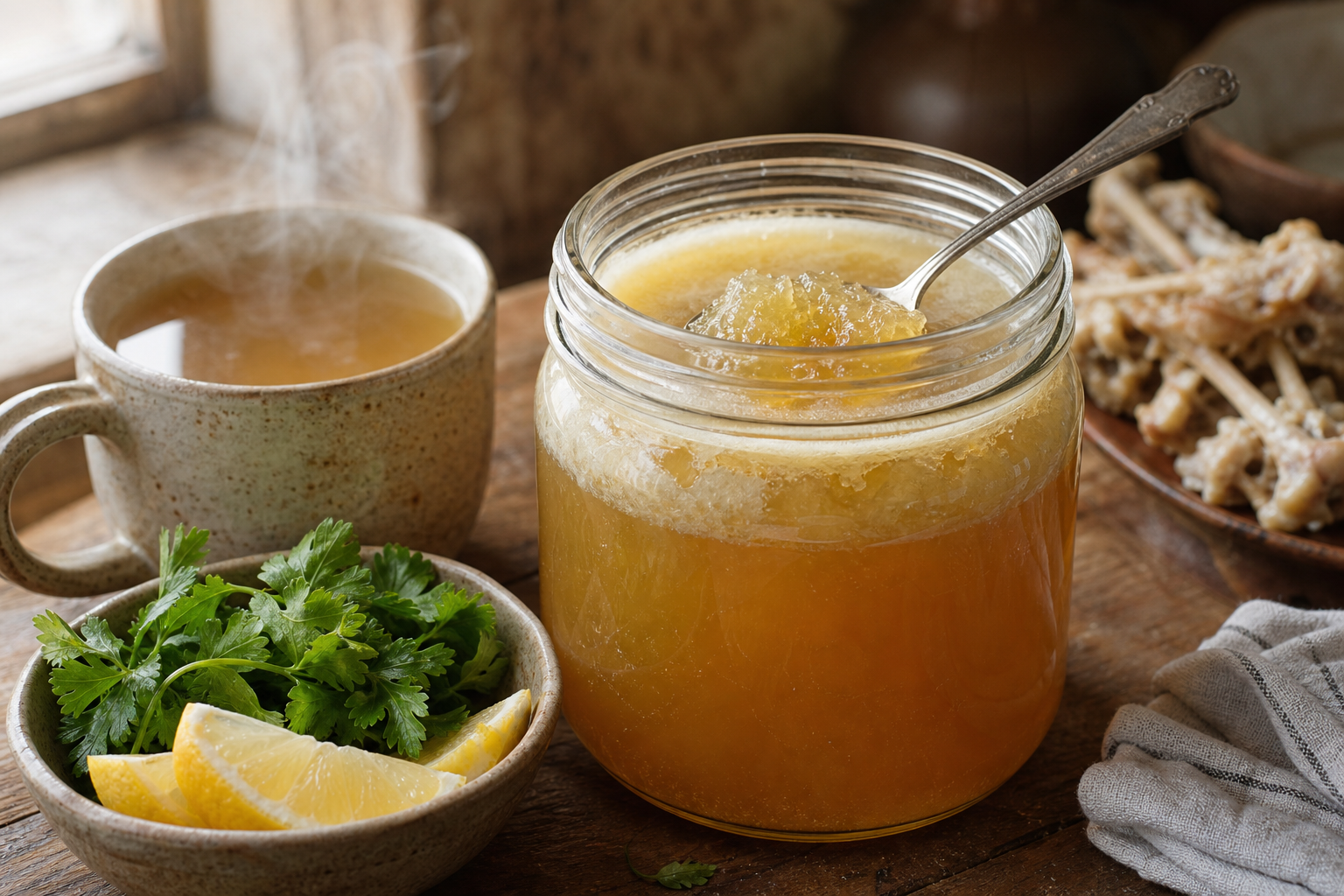
Slow-cooker bone broth
A simple, low-waste broth recipe for using leftover whole-chicken carcasses, roast bones, or beef/lamb bones. Save bones in the freezer until you have enough, then turn them into a rich broth for soups, sauces, curries, grains and warming mugs of broth.
Makes: about 2.5–3 L
Active time: 15–20 minutes
Cook time: 8–12 hours on HIGH
Equipment: slow cooker, colander or fine sieve, clean jars/containers
Ingredients
1.5–2 kg bones:
Chicken: whole chicken carcasses, wings, necks, backs, feet and roast chicken bones
Beef/lamb: knuckle, joint, neck, shank, oxtail, marrow or meaty bones1 brown onion, quarteredLeave the skin on if clean—it gives the broth lovely colour
2 carrots, roughly chopped
2 celery stalks, roughly chopped
3–4 garlic cloves, halved
2 bay leaves
6–10 whole black peppercorns
2 tablespoons apple-cider vinegar
2–3 sprigs thyme, rosemary or parsley stems, optional
Cold filtered water, enough to just cover the bones while staying below the slow cooker’s maximum-fill line
Sea salt, added after cooking, to taste
Method
Transfer the bones to the slow cooker.
Add onion, carrot, celery, garlic, bay leaves, peppercorns, herbs and apple-cider vinegar to the slow cooker with the bones.
Pour in cold filtered water until the bones are just covered. Stay below the slow cooker’s maximum-fill line and leave a little space below the rim.
Put the lid on and cook. Longer cooking produces a fuller broth, especially when using collagen-rich bones such as chicken feet, wings, necks, beef knuckles, joints, shank and oxtail.
—>Chicken bone broth: 8–10 hours on HIGH
—>Beef, lamb or pork bone broth: 10–12 hours on HIGH
—>Mixed bones: 10–12 hours on HIGHYou might need to add more water if it evaporates too much. The bones must remain covered at all times.
Turn off the slow cooker. Leave the lid off for around 15–20 minutes so the broth is safer to handle. Remove large bones and vegetables with tongs, then strain the broth through a colander or fine sieve into a large heatproof jug, bowl or saucepan. Discard the cooked bones and vegetables. They have given their flavour to the broth.Season last.
Cooling and bottling
Let the strained broth cool down before bottling it into jars. Do not pour boiling broth into cold glass jars, as sudden temperature changes can crack the glass. Seal, label with the broth type and date, then refrigerate or freeze. I use clean repurposed tomato passata jars or jam jars.
What happens in the fridge
When your broth chills, two very good and normal things may happen: a firm layer of fat may form across the top. This can act like a natural seal. Break through it with a spoon to access the broth underneath. You can leave the fat in place for flavour, use it for cooking, or lift it off and discard it if you prefer a lighter broth.
The broth may become very jelly-like or fully set. Do not worry—this is amazing. It usually means you have extracted plenty of gelatin from collagen-rich bones. It will melt back into a liquid as soon as you heat it in a saucepan, soup, sauce or curry.
Chicken and ginger broth: add 4–5 thick slices fresh ginger. Finish a mug with lemon and parsley.
Beef and rosemary broth: use beef bones with two rosemary sprigs and an extra bay leaf.
Plain cooking stock: use just bones, water, apple-cider vinegar, bay leaves and peppercorns.
Second broth: refill the slow cooker with strained bones, fresh water and a small splash of vinegar. Cook on HIGH for another 6–8 hours. The second batch will be lighter but is still excellent for soups and cooking grains.
